What's New?

Update from Sierra Leone

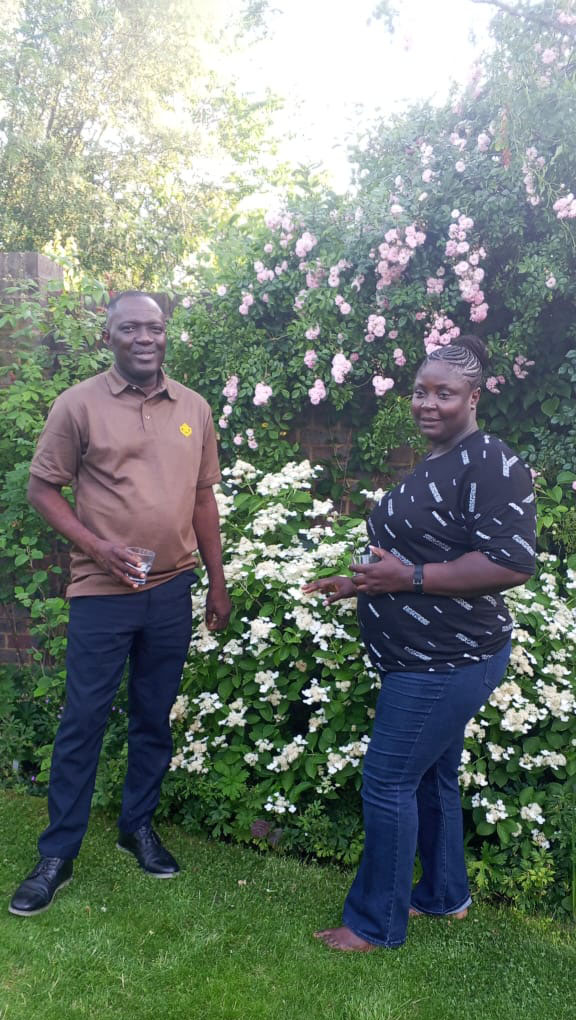
Janet O'Shea, Chair of the Sierra Leone Mission (SLM) brings us pre-Christmas news from our communities in Sierra Leone.

Container Arrival

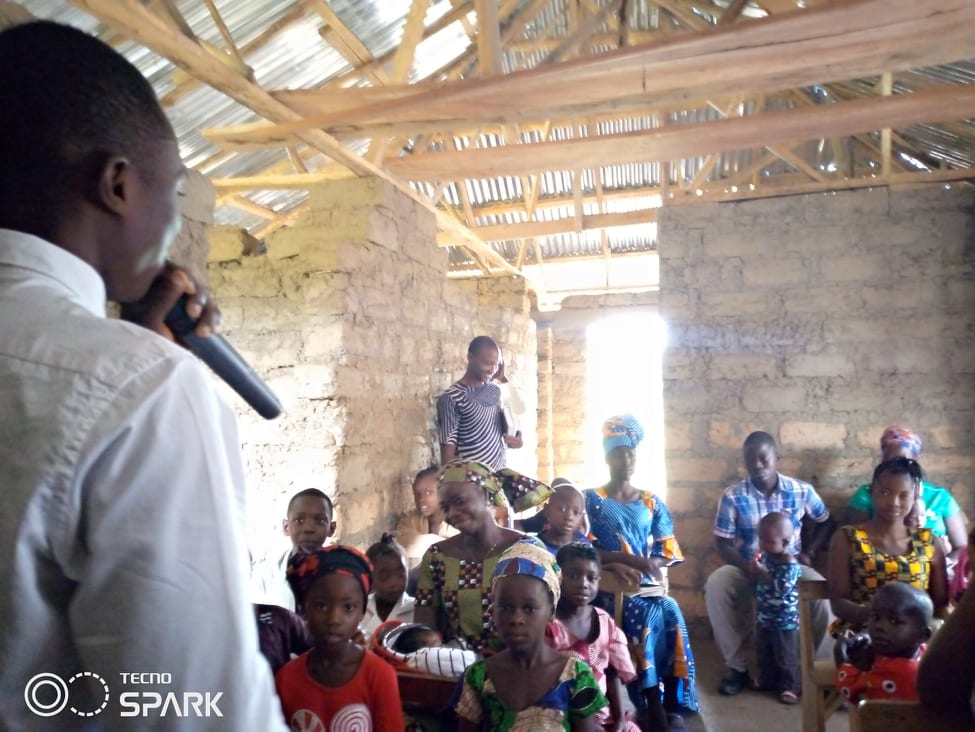
The best news to hear at the beginning of the month was that the container had been released from Freetown docks and had arrived at Bethesda on 4 December. Inevitably it arrived in the middle of the night so the wonderful children spent until 3am unloading the contents!

Magnus' Car Problem

Magnus is overjoyed with all of the items that have been sent from the UK, but unfortunately he is experiencing a huge problem with his car. The engine has been deemed irrepairable due to its age and he is having great difficulty distributing everything. At the moment he is borrowing cars from different people. 

Magnus has not asked us for help, but as part of The Connexion we strongly feel a need to raise money to purchase another car for Magnus. If you are able and would like to contribute towards another car a restricted fund has been opened and will remain open until 9 January. Please mark any gift as CAR. Donation options are below.

Grant from The Stuart Hine Trust

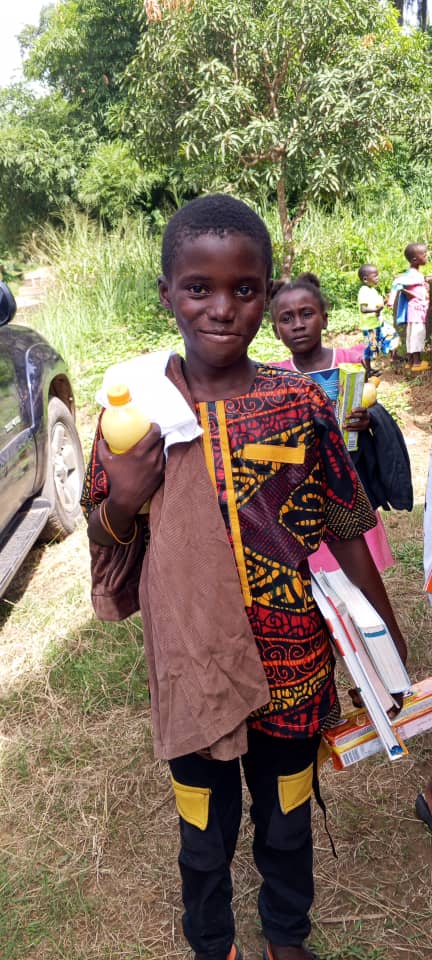
We are very thankful to The Stuart Hine Trust, who gave the SLM a grant for £5,000. This was to be used to purchase bible story books for all of our schools, and Magnus has started distributing them.

Mariatu

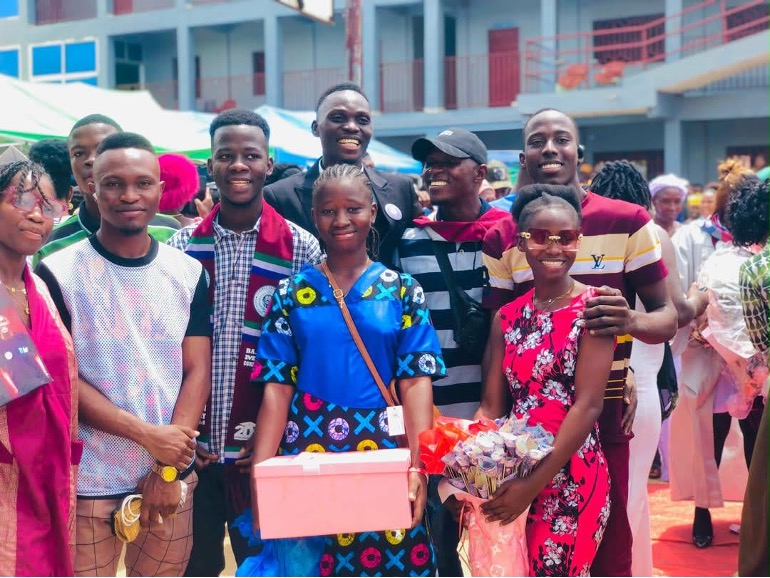
We have also learned of the exciting news that Mariatu Hannah Kamara has graduated with a degree in nursing.  She is the first ‘street child’ raised in Bethesda to complete a university course. We are bursting with pride for her!

Pastor Retreat

Every year in December the pastors in Sierra Leone gather for a retreat. This year they met from 18 to 20 December. We ask you to please remember them in your prayers, and for their hard work and dedication.

On behalf of the SLM we thank you for your continued concern for our brothers and sisters in Sierra Leone. Please pray for the spread of the Gospel in that country.

Janet O'Shea

SIERRA LEONE DONATIONS

If you would like to make a donation, to help SLM's work in Sierra Leone, just click on the Donations button, located at the top of each website page. Please also state if you would like your donation to go towards a particular project. If your donation is towards a new car for Magnus, please reference it CAR.

Donating by Bank Transfer

Barclays Bank

Sort code: 20-16-08, Account number: 30799076, Account name: Sierra Leone Mission 

(NB We are very grateful to receive anonymous donations, but when making a bank transfer donation, the donor's name is needed for auditing purposes. Please be assured this information will remain private.)

Donating by cheque

Please send cheques to: Sierra Leone Mission. Postal address: Janet Foord, Sheppey Evangelical Church, Warden Bay Road, Leysdown on Sea, Isle of Sheppey, Kent ME12 4NA


Trip to Sierra Leone

In late September Jonathan Redmayne and his university friend, Paul Martin, travelled to Sierra Leone on behalf of SLM. Read below Jonathan's account of their trip:

It was our first time in West Africa and was a wonderfully uplifting experience, but at times it also left us wanting to weep.

Like Janet and other members of the SLM Committee, we stayed at Bethesda Children’s Centre, in the part of the building known as the Missionary Quarters. In spite of having discussed it on countless occasions in committee meetings, it bore little relation to what I had expected. It sits beside a noisy dual carriageway, built by the Chinese, and is surrounded by high walls topped with broken glass and barbed wire, which engenders something of a fortress mentality. Magnus explained this was essential to prevent thieves from breaking in.

In spite of, or perhaps partly because of this, Bethesda felt a place of sanctuary and it was a great privilege for us to stay there for a fortnight or so and get to know the young people in quite an intense way. All of them are former street children, who were once essentially without hope, and we witnessed lives which, under Magnus’ gentle but wise supervision, had been transformed materially, educationally and spiritually. It is a remarkable statistic that ten of the eighteen young people are currently at university, of whom two, Abdul and Mariatu, are about to graduate.

And yet, although their lives are incomparably better than they would otherwise be, from our Western perspective they have remarkably little. While an elevated tank provides running water for the Missionary Quarters, it is insufficient to supply water for the rest of the building and they have to draw water manually from a borehole within the compound.  ‘Taking a shower’ for the young people involves pouring a bucket of cold water over themselves and the ‘kitchen’ comprises an external hut open to the elements and shared with chickens and lizards, with rickety wooden benches on either side of a fire, with a heavy iron pan above it, in which all of the food is cooked.

Getting anything done appears to be a heroic endeavour, requiring ingenuity, perseverance and the patience of Job. And so, whenever we asked Issa, who is now in his final year at university and doing Computer Studies, to print off any documents for us, it would often take him over an hour with an elderly printer and intermittent electricity supply and, if, as frequently happened, the printer cartridge ran out of ink, the only practical solution was for him refill it manually, as new cartridges were too expensive or simply unavailable.

Notwithstanding the frustrations of daily life, however, there was a palpable sense of joy and contentment at Bethesda, which we also found elsewhere on our trip but which is perhaps absent in the lives of many in the UK and the West more generally, in spite of our being so much better off materially. Magnus told us that most people in Sierra Leone are thankful if they have a single meal each day.

That overwhelming sense of joy was also evident in the morning service we attended at St Mark’s Cathedral in Waterloo on the second Sunday of our trip, which lasted for nearly three hours. It was a curious but rather wonderful blend of formality, with a robed choir, an Anglican liturgy and Magnus in ecclesiastical purple, on the one hand and uninhibited African worship on the other. The singing of eighteenth-century hymns written by the likes of Augustus Toplady and Frances Havergal, which would have been familiar to the Countess, gave way seamlessly to Gospel music sung with gusto by four ladies, at which point the female choristers began to sway gently and the congregation to dance.

st marks clergy choir sl trip

But even amidst such joy, there was a poignant reminder of Sierra Leone’s recent brutal history. A memorial plaque, just inside the entrance to the Cathedral, recorded the deaths of nineteen members of the congregation on a single day in the summer of 1999, towards the end of the Civil War, when they were murdered by rebels from the Revolutionary United Front, as they entered Waterloo.

Paul, who is a retired RE teacher, was asked by Magnus to teach English to two classes, the first aged 11-12 in the Junior Secondary School and the second aged 15-16  in the Senior Secondary School at Fufu Water run by the Sierra Leone Connexion (the ‘Connexion’). The children in both classes were of mixed ability, to an extent which made it difficult for Paul to pitch his teaching at the right level, but, even though there was greater understanding among some of the children in the older class, they clearly found it difficult to think in English or express things in their own words.

classroom sl trip

This may not be entirely surprising as some of the teachers themselves have quite limited English and struggle to read it and a number are without teaching qualifications. This is exacerbated by old-fashioned teaching methods, which encourage children to learn by rote rather than engage in discussion or think for themselves. Undoubtedly the lack of resources and poor state of the classrooms are also a significant factor. Few, if any, of the children have textbooks and many of the classrooms are quite dark, being without electricity and having windows with heavy mouldings, intended to prevent thieves breaking in, which restrict the light and strain the eyes of both pupils and teachers.

The shortcomings in the state of classrooms are even more acute in Connexional primary schools and this was evident both at Fufu Water itself and the various other schools we visited in urban and rural areas. In some cases, classrooms were barely usable during the rainy season because the roof leaked. In other cases, there were no ceilings, so that, in the dry season in particular, conditions within the classroom were sweltering. Some blocks lacked any proper partitioning between individual classrooms, so that the children were constantly distracted by noise from the adjoining classes. A measure of the extreme difficulties faced was evident at one rural primary school we visited, in Magbafti. The headteacher showed me an external toilet block, serving both children and staff, from which all of the doors had recently been stolen.

Another serious challenge facing Connexional primary schools is the very high numbers of children they have to accommodate and the resulting class sizes, many having over sixty children and some even over seventy, but with a single teacher in charge. It is difficult to see how a child can have a proper education in these circumstances. This is in large part because of the legal status of Connexional primary schools, most, if not all, of which are deemed to be Government-aided because the headteacher and some of the staff receive Government salaries and are therefore its employees. The majority of the teachers, however, receive no remuneration from the Government and about a hundred are largely dependent for their income on the monthly grants from SLM (£22 per month per teacher, equivalent to half of the national minimum wage in Sierra Leone). This figure excludes a significant number of community teachers, who receive no remuneration from the Government or support from SLM.

As a result of this legal status, Connexional primary schools are required by law to admit any children whose parents wish them to go there, and are unable to set any limit on the number entering the school, even if the classroom accommodation is insufficient. This problem is particularly acute for primary schools in rural villages, where the birth rate tends to be higher than in urban areas. A further consequence of this status is that schools are not allowed by law to charge fees. This is compounded by the tiny allowance the Government gives each primary school for maintaining and improving its buildings (equivalent to 36 pence per child per year) and inevitably means the financial burden of maintaining school buildings and putting up new ones to accommodate the extra children falls almost exclusively on the Connexion, and therefore by extension SLM.

As a retired property lawyer, my primary task was to review the title deeds for the schools, churches and other properties run by the Connexion and then make a presentation to the trustees of my findings and advise them on the best way forward.

sl connexion trustees

I took as my starting point their duties under the Connexion’s constitution. These are not only to sign the relevant documents for any acquisition or disposal of property but also, more generally, to manage all of the properties owned by the Connexion. This came as something of a revelation to the trustees.

My findings were fourfold.

First many of the transactions had been left uncompleted and the documentation was limited to a measured plan prepared by a licensed surveyor, a receipt from the vendor for the purchase monies and perhaps a land sale agreement, but without any conveyance to the Connexion. While understandable because of all of the costs incurred in the conveyancing process in Sierra Leone, not least because everyone involved, even an independent witness to a signature, took the opportunity to charge for their services, it meant that legal title to the land in question had never passed to the Connexion.

Secondly, even in those cases where transactions had been completed and the conveyances registered at the Office of the Administrator General in Freetown (and the necessary tax paid), often those conveyances were in favour of a non-existent entity - an attempted amalgam of the Connexion itself and a UK company used to purchase land where SLM provided the funds. As a result, again legal title had never passed to the Connexion and remained with the vendor.

Thirdly in a number of cases the deeds to a property had been lost or mislaid, which meant the Connexion was unable to provide any evidence of its title.

And finally in many cases the physical boundaries had not been properly marked on the ground and the extent of the land owned by the Connexion was therefore often unclear.

My conclusion was that for all these reasons the properties owned by the Connexion were vulnerable to encroachment but that there was a potential solution - the doctrine of adverse possession. This allows someone, who has occupied land in Sierra Leone for more than twelve years and held themselves out as the legal owner without challenge, to claim legal title to that land and have themselves registered as the legal owner, so long as they can provide statutory declarations to this effect. The alternative would be to go cap in hand to the original vendor (or his family) and ask for a conveyance of the land. This would, however, mean the cat was out of the bag and almost certainly be seen by the vendor or his family as an opportunity to extract substantial further funds from the Connexion, even though they might be legally obliged to convey the land.

All of this may sound rather dry and dusty but it really matters. The Connexion can only carry on its existing activities through its properties, whether that be churches, schools, Bethesda or the Health Centre. If it loses the right to use them, its ability to continue proclaiming the Gospel, rescuing street children and providing a Christian education and healthcare is in jeopardy. Realistically, however, it could take ten years or perhaps even longer to resolve all of these issues.

Why these things do really matter is painfully illustrated by what happened at King James Primary School. In 2014/15 the Chinese wanted to build a factory on adjoining land and incorporate a large part of the school’s existing site. The site was owned by the Government but had been let to the Connexion. Unfortunately the Connexion had lost its copy of the lease and could not therefore prove its right to occupy the site and was unable to prevent the Government from giving three quarters of the site to the Chinese.

As a quid pro quo, the Chinese agreed to pay for a new classroom block to be built on the remainder of the site but reneged on that promise. Save the Children then offered to pay for the new block but changed their mind and decided to spend the funds elsewhere. As a result of this unhappy saga, the Connexion had no option but to put up a temporary classroom block five years ago. We visited this block, which resembled a cattle shed, and witnessed for ourselves the dire conditions. Over 200 children were being taught in semi-darkness in four separate classes but with barely any partitions between them and under a corrugated iron roof without ceilings, which would, we imagine, have been unbearably hot in the dry season.

It is easy to feel despair when you see such things but our abiding memory of our trip to Sierra Leone is of a sense of joy, hope, and contentment amidst all the struggles of daily life. I think we have much to learn from their example.

Jonathan Redmayne 


Prayers for Sierra Leone - December 2025

Please join Rev Amidu Koroma in prayers for Sierra Leone during December.

Firstly, we thank our Lord for this month of December, for His grace and mercies in the last month in 2025.

We also thank our Lord for helping us with a successful Connexion Youth Election. Our new youth President is Brother Yayah Kabia. We pray that God will strengthen him in Jesus mighty name.

Thanks to God are offered to for His provisions of our churches and schools as well as the Connexion Health Centre.

Please pray for Bishop Magnus Bendu, especially his passion for the growth and development of the Connexion in Sierra Leone. We ask for God to continue to bless him in Jesus mighty name.

We also pray for the Chairman Janet O'Shea and the entire executive team of SLM and the Connexion in UK. We ask for God to continue to bless them in Jesus mighty name.

We humbly pray for those suffering sickness and ask for healing for each of them. Please pray especially for Madam Adama Koroma at Morthaim Community, who has suffered a stroke and Elder  Moses at St John's Goderich, who is challenged with an eye sight defect. 


Please pray for the Gladys Durrant Annaul Ministers Retreat at the Port Loko District of Sierra Leone. We ask for safe travel for those attending, shared love and mutual fellowship.

We also pray for St John's Church, Goderich. The church will be celebrating 190 Years in the Connexion on Sunday 28 December at their 10am service. We ask God for a spirit filled service in Jesus mighty name.

Amen

Sending off Shipment 2025

Read below Janet O'Shea's report of dispatching the annual shipment to Sierra Leone - which was not without its challenges!

Getting everything packed and ready in time for the shipment was our first concern as we needed to deliver all of the boxes to Hailsham by 8 October. 

We'd originally planned for two vans to travel up from Cornwall, but the amount we were transporting necessitated the use of three vans - all fully loaded, which then led to difficulties along the way. At Andover our van was stopped by the police, who informed us that it exceeded the allowable weight limit.  As a result, half of the van's contents had to be unloaded and stored overnight at Andover, accompanied by the payment of a hefty fine and one day’s journey turning into two.

Meanwhile, on 8 October, Tim Wells and Martin Brown with a small group of willing helpers took on the task of packing hundreds of boxes into the forty-foot container. During this mission of considerable expertise, I received several messages saying, 't’s never going to fit!’ but Praise the Lord - it did!

On behalf of the Sierra Leone Mission (SLM) committee I would like to extend huge thanks to everyone who contributed in any way to Shipment 2025. The container was due to arrive in Freetown port yesterday, 18 November. We will keep you posted of its progress!

Prayers for Sierra Leone - November 2025

Please join Magnus and the team in Sierra Leone for prayer requests during November.

We pray for The Connexion Youth Fellowship in Sierra Leone, and dthe outcome of their Fellowship President Election  which took place on Saturday 8 November at St. Mark’s Cathedral, Waterloo. 

Please also pray for the sick within our Connexion communities. Elder Martin at St John’s Church Goderich, who has suffered from a partial stroke. Elder Moses also at St. John’s Church, who has had an eyesight problem for several years now.

In addition, we pray that God will avert the spread of the Mpox outbreak currently in Sierra Leone.

We pray for our pastors, teachers, schools and churches, together with Bethesda Orphanage and the Health Centre. We ask that God will continue to make provisions and take care of physical and spiritual needs.

We pray for the Chairman in UK Janet O’Shea and her dedicated team. We ask that God will continue to bless them and expand their vision. We also ask the Lord to continue to guide and bless their families.

We pray for our leaders in Sierra Leone, Bishop Magnus Bendu, The Superintendent General Very Rev James Davies and the ConnexionSecretary Rev Jamestina Sankoh. We ask God to continue to direct them with wisdom and grace, as they continue to lead the Connexion with vision.

We pray against the spread of drugs among the youths in Sierra Leone, especially the addictive drug known as ‘kush’. We pray for God to help the Government as they are fighting to eradicate it.

We also ask for God to heal the economy in Sierra Leone and fight against high inflation.

Finally, we pray for the forthcoming Pastors Fellowship Annual Retreat, which will take place from 19 to 21 December, 2025. We pray for all of the participants to travel safely and for the love of Christ to be with us as we continue in fellowship together. 

We offer these prayers in the mighty name of Jesus, Amen.


Ken Stone - Sierra Leone in the 1920s

Below is the third of Ken Stone's writings about Sierra Leone. This article was written in approximately 2003, looking back to the 1920s, and makes very interesting reading.

SIERRA LEONE IN THE 1920s

I recently wrote about a book published in 1924 entitled Sierra Leone, for Civil Servants, trading companies and others with an interest in the country. As I opened the book to give you a further insight into Sierra Leone nearly 80 years ago, I noticed on the fly leaf a customs receipt dated 22 April 1925. So my book was actually used in Sierra Leone! But why should duty be payable on a book?

Trading Information

WEIGHTS and MEASURES. Imperial measures were used, and it is interesting that the bushel and half-bushel were compulsory in transactions involving purchase for export or sale of native produce. You may have heard that foods, sold by street traders, such as rice are measured by the “cup”. It has no legal sanction, but is in common use throughout the country. In 1924 the “cup” used was the Capstan or Virginian cigarette tin. In more recent times I have noticed that empty evaporated milk tins are used as “cups”.

TRADE. Both then as now Sierra Leone had very little manufacturing industry or food processing. Imports did not exceed exports by much, and by far the main EXPORT component was the oil palm. Thousands of tons of PALM KERNELS valued at about £1,000,000 were exported (97% to the U.K.) and some palm oil. More palm oil would have been sold abroad but for the large quantity consumed by the local population for whom it is an important part of the diet. The other main exports were GINGER and KOLA NUTS.

Today, of course, the value of minerals far exceeds that of agricultural products exported.

So what did Sierra Leone IMPORT? Let me quote some commodities from the book:

COTTON PIECE -GOODS (value £480,000) From the U.K. The lowest qualities of shirting, blue bafts, brocades white and coloured, grey bafts and delvas, drills, woven checks and stripes, real and imitation Madras handkerchiefs.

CLOTHING (value £65,000) Then as now, in such a hot country, the clothes of the people were simple. Imports were mostly for the British who lived and worked there, including cream, flannel and tweed trousers, underwear, and woollen and cotton caps. Fancy though, straw hats were imported for the local people!

Other textile goods: STOCKINGS and SOCKS were brought in of silk, cashmere and cotton, “mostly for Europeans and educated Africans.”

COTTON BLANKETS: Lowest possible quality. In white with red and blue stripes.

YARN in bundles of 24 packets, TOWELS and SEWING COTTON.

CEMENT (value £25,000) Mostly Portland cement in 400 lb. barrels.

CORRUGATED IRON SHEETS (value £3,000) From the U.K.

“Modern and better class houses are usually built of cement blocks with corrugated iron roofs.” This remains true today, but in many of the villages buildings are made of mud blocks with thatched or iron roofs.

MOTOR CARS and MOTORCYCLES. (value £2,000). “Mainly from the U.K., but most cars in use are American. Total number of cars in the colony - 175; Motorcycles -105.”  How different from today, when most of the many thousands of vehicles are imported from the  Far East. Motorcycles have made a return in recent times, being used as personal “taxis” as they can weave through the traffic jams.

PAINT (value £2,850). “Cheapest quality for trade”.

POTATOES and ONIONS (value £14,600) from the U.K., Canary Islands and France. Nowadays the potatoes are known as “Irish potatoes” and onions are grown locally.

FLOUR (value £31,000) from the U.K. and the USA. In barrels and bags of 196 lbs.

UMBRELLAS (value £5,000). 24,686 were imported in 1923.

TOBACCO (value manufactured £19,400, unmanufactured £107,400). Significantly only cotton cloth had a higher value.

I hope this gives you an idea of the economy in the 1920s.

Kenneth B. Stone 

Sierra Leone Visit

Jonathan Redmayne who is an Sierra Leone Mission (SLM) committee member, and his associate Paul Martin travelled to Sierra Leone on 23 September. There was much disruption at the airports the weekend before, due to a cyber-attack, but thankfully this only delayed their flight by an hour. 

paul sl visit

Paul, a retired RE teacher, is making his first trip to Sierra Leone, where he will be teaching at Hailsham Secondary School in FooFoo Water.

jonathan sl visit

Jonathan, who is a retired property lawyer, will be examining property deeds to hopefully unravel some complications that have arisen.

Both Jonathan and Paul will be preaching as well as meeting with headteachers, pastors and leaders. They are staying at Bethesda, where they will experience the wonderful company and fellowship of the children who live there, and plans are also in place to treat the children to a day out at the beach.

On arrival at Sierra Leone, unfortunately Jonathan and Paul's luggage had gone missing. However, prayers were said and we are pleased to report that three days later the suitcases were located and returned, which meant the children at Bethesda could receive their presents from the UK - and Magnus could enjoy his favourite cashew nuts!

Please continue to pray that the visit will be productive and helpful to Magnus and our Sierra Leone communities. We look forward to hearing more from Jonathan and Paul at the Conference in October.

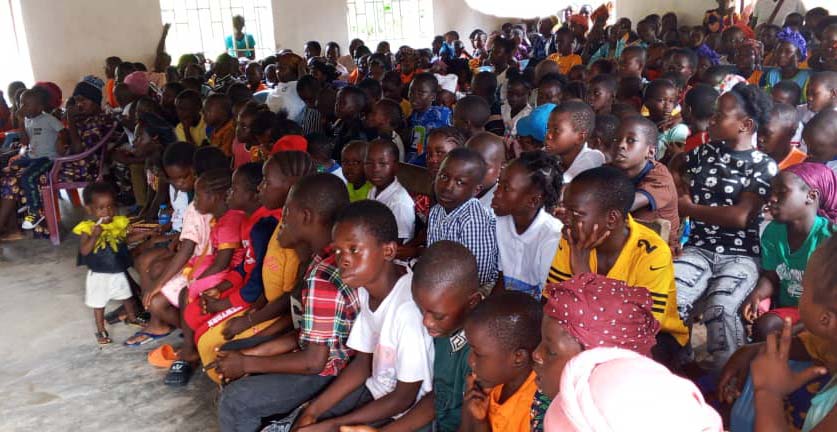
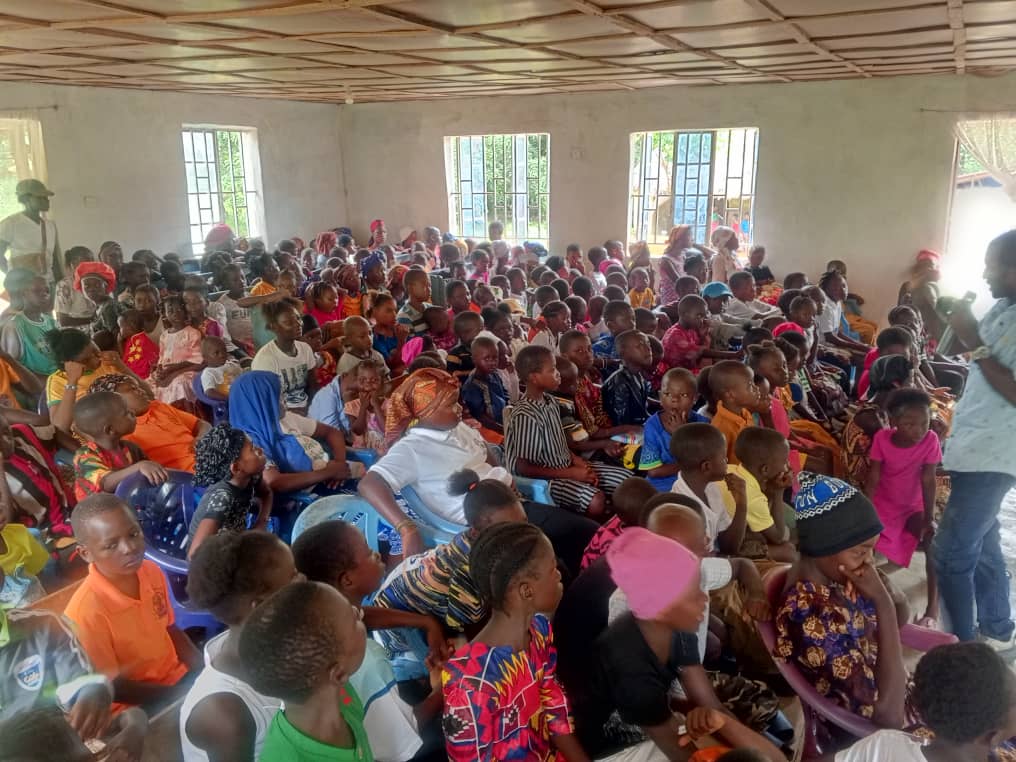
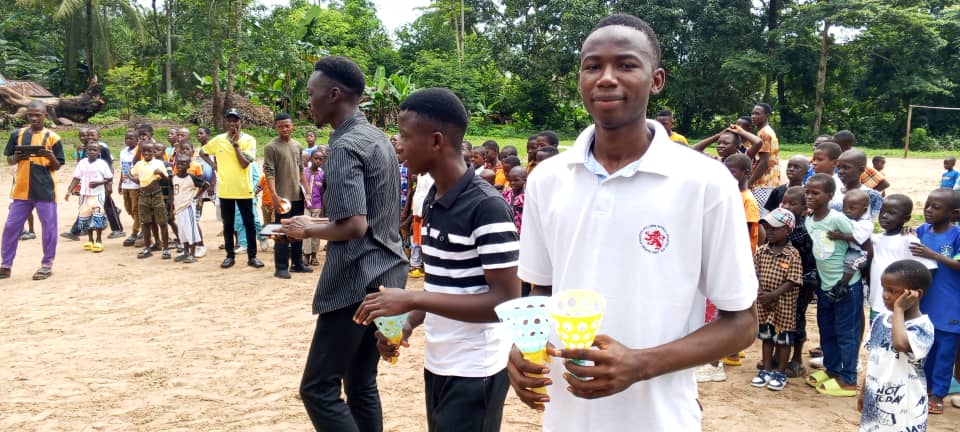
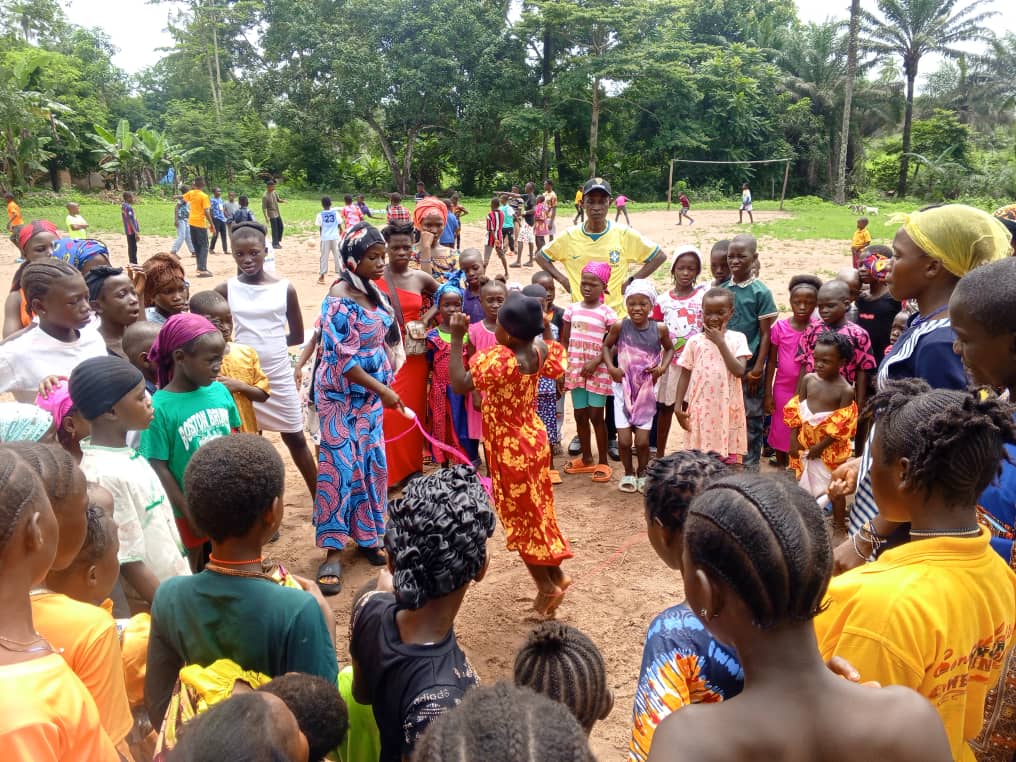
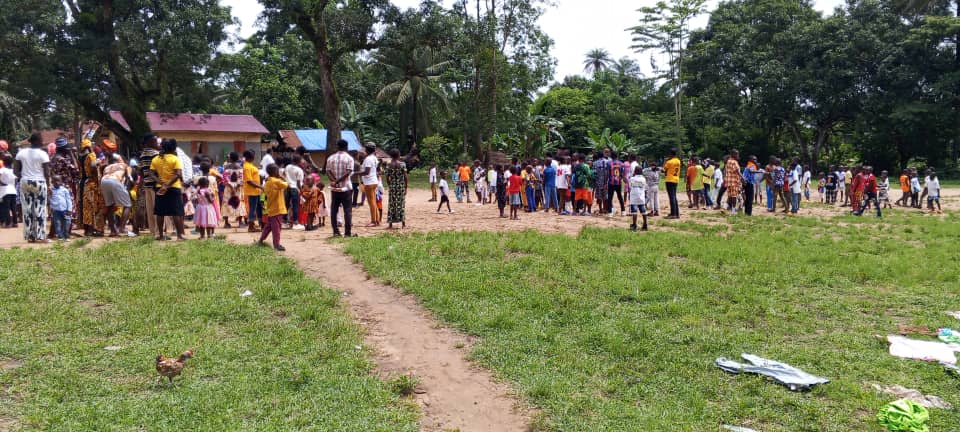
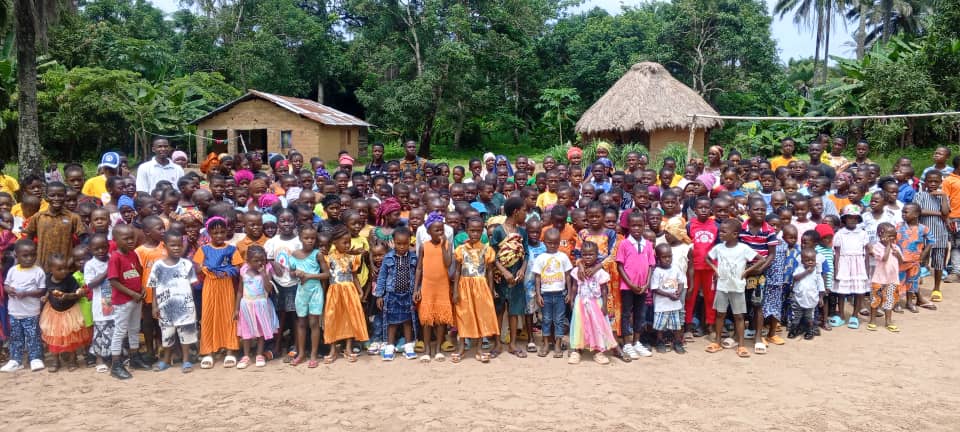
(The cover image shows this year's children's retreat in Sierra Leone)

Ken Stone - Sierra Leone Transport - 1892 Style

Below is the second of Ken Stone's many writings about his experiences of Sierra Leone. This article entitled Sierra Leone Transport - 1892 Style was originally submitted to The Voice.

SIERRA LEONE TRANSPORT - 1892 STYLE

In1963 I went to live and work in Basingstoke. It was then a market town of 20,000 people and had a church of the Countess of Huntingdon’s Connexion in the centre which my wife and I attended. It was quite well supported but we did not particularly enjoy the services. This was not because of the local members, who were welcoming and friendly, but their services were very formal and built around the Prayer Book, whereas we were accustomed to Free Church Gospel Services.

Our disappointment did not last long. Basingstoke was being developed as a 'New Town'. Housing estates were thrown up and light industries introduced. (By the time we left in 1973 the population had grown to 100,000}. In order to provide stores and other facilities the whole of the town centre was re-developed which meant that the site of the Countess’s church was required and the church was pulled down.

It had stood in Wote Street, just below a jewellers owned and run by 90+ years Mr. George Willis. Why should I mention such an obscure fact? It is because Mr. Willis (or his son?) made a visit to Sierra Leone in 1891-2, accompanied by his minister, the Rev. B.W. Adams.

Years ago two letters written by Mr. Willis from Sierra Leone came into my possession. Although both are addressed to Annie, they are similar. One of them, which was submitted to The Voice, is printed out below:

From Waterloo, Sierra Leone, 28 January 1892.

Dear Annie,

'Your letter arrived yesterday and very welcome it was. I had heard only once from home and was looking out very anxiously for the postman. Today I have received one dated the 6th and hear that Nelly has arrived in Bristol. Postal arrangements are not as at home and we live 21 miles from the post office and get letters about once a week. I have just heard there is a chance of being able to send a line, so have set to work to scribble this to you.

Sierra Leone is a beautiful place as far as vegetation is concerned but it is hot in the middle of the day, when we stay indoors and read or sleep. We generally rise at 5am and think of bed at half past 8. We are enjoying first rate health and could not be better I think although the Colony has such a bad name. The capital, Freetown, is a very unhealthy place. We have lots to do and a good many people call to see us, sometimes a dozen will come in to shake hands and have a talk. The little children are very pleased to be taken notice of. They have prayer meetings every morning. On Sundays I give addresses in our different churches and the people pay great attention.

'The manner of conveyance is novel. We are carried in hammocks, on men’s heads. Our first such journey was 21 miles Freetown to Waterloo when the road nearly all the way was thronged with people and children from the different villages through which we passed, to greet us with songs and dances and carrying palm branches.

'The river is infested with alligators. We went down in a boat but did not see one. Last Sunday afternoon I was sent for as there was one to be seen in the wharf on a bank. So off I went and saw it but it was only about 6 feet long. Several people have been killed by them.

'I trust Fred’s cold is gone away. Influenza is bad in the neighbourhood of Basingstoke and many are seriously ill. The weather is wintry. Here the thermometer reads 80 degrees at 5am when I am getting up. When it goes to 72 it feels very cool as it has a few times. I hope Nelly is enjoying herself as I should if in her place. I sent her a postcard with good wishes for her birthday.

'Had a splendid voyage - no storm or roughness, only a little swell the first few days. Have been here half my time, must now prepare for returning. Probably by Feb.16 shall leave here. Cannot describe much in a letter like this - must come and see you on my return.

'There are many genuine Christians here and prayer without ceasing for our safety has for a long time been made - as well as at home and truly we have had a wonderful time of it. I must now conclude - with love to each and best wishes for the New Year.

I remain your affectionate brother, George W. Wiliis'

Street Children Update

Magnus made four visits to see street children in recent months. Two were in the provinces, Makeni and Kono, and the others in Waterloo and Freetown Central.

(NB The photo featured is from Unsplash images, courtesy of Documerica. Magnus was not able to photograph children during his visits)

Magnus’ report

'In Makeni, I partnered with another children's home, and many children and youths turned up, including some with physical disabilities, which were probably caused by epilepsy. We gave them bread with sardines and Le50 each, and by 12.30am numbers grew to approximately 40 in an unfinished building. The partnering home also provided items of clothing for each of them. We were not able to take photos as a matter of policy, which argues that it's dehumanising.

'After Makeni, I visited a place called Mabella in Central Freetown, but we were unfortunately not able to share the bread and sardines properly. A group of big boys invaded us mid-way in our distribution of the food and also took my phone from Alie, a Connexion member, who was assisting me. They threatened us and told us to leave immediately, thinking that we were police officers. Thankfully, someone gave me another phone to replace the stolen one.

On 28 June, I also used our Council of Churches trip in Kono to visit the homeless children with one of the pastors, and by 1am there were large numbers of children present. On the whole, it was peaceful, but the unavoidable big boys also came to disrupt. They are all drug addicts of the popular 'Kush' drug, which nowadays makes visiting street children extremely risky. These bigger boys should not be out with the homeless, and girls are very difficult to meet now because they are very vulnerable to abuse, or may be housed by older females to use as prostitutes. At Kono, we were thankfully able to share around 45 parcels of food before the bigger boys arrived to disrupt us.'

Prayer for Magnus

Magnus works tirelessly to try to help and save these highly vulnerable children. We ask for prayer and support for him and this hugely important mission. 

About Kush

Over the past couple of years there has been a massive rise in drug taking among the children and in particular the drug ‘kush.’

Below is a YouTube clip explaining the real dangers of this drug, which is mixed with human bones. It is so addictive, users can become hooked after a single hit, then find themselves quickly trapped in a cycle of self-destruction. Working to help these children has become more dangerous as they are desperate for food.


SIERRA LEONE DONATIONS

If you would like to make a donation, to help SLM's work in Sierra Leone, just click on the Donations button, located at the top of each website page. Please also state if you would like your donation to go towards a particular project.

Alternatively donate by Bank Transfer

Barclays Bank

Sort code: 20-16-08, Account number: 30799076, Account name: Sierra Leone Mission 

(NB We are very grateful to receive anonymous donations, but when making a bank transfer donation, the donor's name is needed for auditing purposes. Please be assured this information will remain private.)

Or send a cheque to 

Sierra Leone Mission. Postal address: Janet Foord, 20 Kingsborough Drive, Eastchurch, Isle of Sheppey, Kent ME12 4DN


Sponsors Needed!

Abdul and Mariatu from Bethesda Orphanage have almost completed their four years of study at university. Both of them have excelled in their subjects and they are now starting to think about their future careers.

fatima miriatu abie
Mariatu, Fatmata and Abie 
abdul ibrahim issa andrew

 Ibrahim, Abdul, Issa and Andrew

More students

We currently have five teenagers from Bethesda attending university. Issa has just finished his third year and Andrew, Fatmata, Ibrahim and Abie have now completed their second years.

Magnus is very keen to provide university education for three more Bethesda teenagers this year, and he has asked the Sierra Leone Mission (SLM) to assist if it is possible.

SLM have been blessed by the generosity of sponsors for the seven children already attending university, particularly in light of the rising costs over the past four years. We are now praying hard for new sponsors to come forward to help to make it possible for Magnus to fund the three additional teenagers - Adima, Adima and Daniel.

adima adima

Adima and Adima 

daniel

Daniel

If our prayers are answered, this would mean that 10 street children, previously rescued by Magnus, will have the opportunity to further their education. Something that would have previously been thought impossible for these children, when trying to survive on the streets with no hope or opportunity to escape to a better life and a promising future.

As Abdul comes to the point of graduation, we heed his words when setting off to university:

'Our destiny is not created by the shoes we wear but by the steps we take. This is to express my gratitude and how thankful and happy I am with what is happening to me. Words are not enough to express my happiness and gratefulness to all of you. It is with vast pleasure that I send this special thanks from me, Abdul Mansaray, to all of you who conferred as a body to support me and my educational career, in order to see me become a renowned person in the world at large. As Christians, we must always welcome the lost and receive people of all kinds with Christ's love to support the weak and needy.  

'Let me take this opportunity to thank you all for the support you are giving me. This support has a great impact in my life, thinking back to where Bethesda took me from. If I was not taken from my past life as a small boy 12 years ago, by now I would have been hopeless, or in prison, or dead. 

'Today I am talking about university. As I go to College I am going with a restful heart as you have given me a computer and a phone, which will make learning easy for me. I really appreciate them and may God bless you. I promise to make you proud and to assure you that I will do my best to fulfil my aspirations. Please continue to pray for us, for God's direction and protection'. 

More prayer

Prayers can often be miraculous. Time and again we see that when help is needed, God prompts the right people to come forward. Our prayer today is that God will continue to prompt his people to support and enable more children to be led to a place of safety and provided with long-term, life-changing opportunities.

With the addition of three new children, Adima, Adima and Daniel, attending university, total costs for 8 students (including Fatama, Abie, Ibrahim, Issa and Andrew) will rise to £12,000 overall, which includes everything the teenagers need. Realistically SLM is hoping to find new sponsors, who may contribute £1,000 per year over the next four years.  


SIERRA LEONE DONATIONS

If you would like to make a donation, to help SLM's work in Sierra Leone, just click on the Donations button, located at the top of each website page. Please also state if you would like your donation to go towards a particular project.

Alternatively donate by Bank Transfer

Barclays Bank

Sort code: 20-16-08, Account number: 30799076, Account name: Sierra Leone Mission 

(NB We are very grateful to receive anonymous donations, but when making a bank transfer donation, the donor's name is needed for auditing purposes. Please be assured this information will remain private.)

Or send a cheque to 

Sierra Leone Mission. Postal address: Janet Foord, 20 Kingsborough Drive, Eastchurch, Isle of Sheppey, Kent ME12 4DN


  • 1
  • 2
  • 3
  • 4